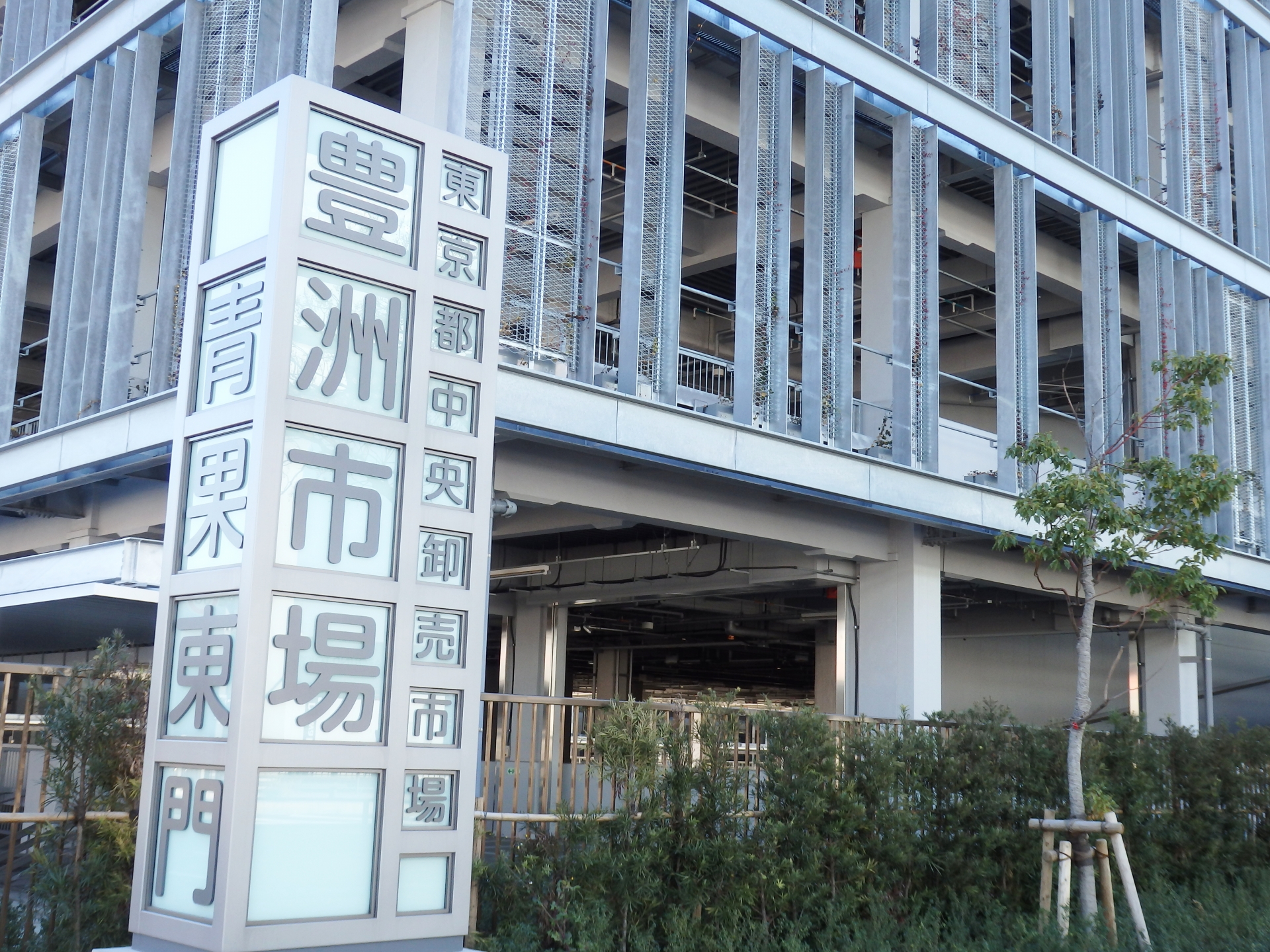
Almost six years have passed since Tokyo’s Central Wholesale Market relocated from Tsukiji to Toyosu. Although I had hoped to visit sooner, the opportunity never seemed to align—until recently. Many of the ingredients used in Kaiseki (traditional tea ceremony meal) are difficult to find in regular supermarkets, so I was excited from the moment I left home.
When I arrived at Toyosu Market Station, I was immediately struck by the scale of the buildings and the wide passageways. The space felt like a new stage carrying forward the history and craftsmanship of Tsukiji.

Provided by: Tokyo Metropolitan Central Wholesale Market
With a guide, I spent the day visiting several sections of the market. By the time I checked my step count later, I had walked more than 10,000 steps.
- Fish Wholesale Market
- Fisheries Intermediate Wholesale Area, 4F (Uogashi Yokocho)
- Fruit and Vegetable Market
Also, you can find the map bellow:
Toyosu Shops and Restaurants Map
Before starting the tour, the guide introduced some important etiquette for visiting the market:
- Mornings are reserved for professionals; visitors should come between 8–10 a.m.
- Visit in small groups of four or fewer, and keep conversations quiet.
- Do not haggle—transactions here are designed for large-scale professional orders.
- Do not touch products or take photos without permission.
Toyosu Market is truly the kitchen behind Japanese cuisine. Carefully handled ingredients purchased here are then sent to restaurants throughout the country. Walking through the market, I felt that visiting with respect and mindfulness is essential.
1. Fish Wholesale Market
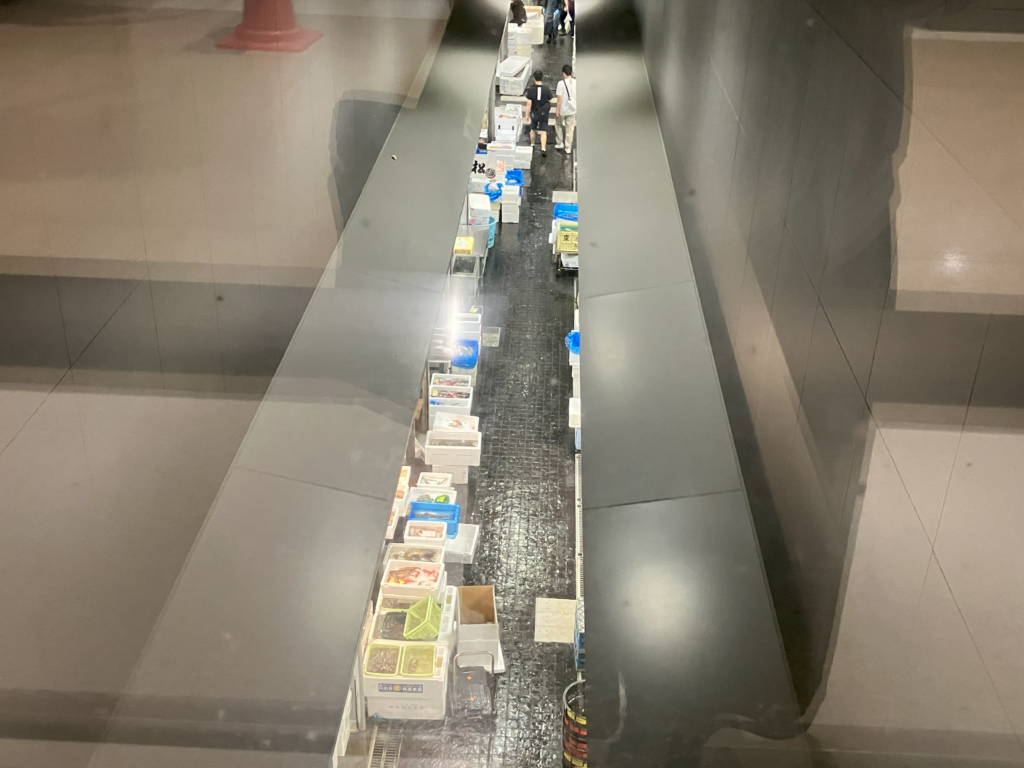
This was the area I had been most looking forward to. A security guard stood by the escalator leading down to the area, and many visitors turned back, understanding that entry was restricted.
※The guide shared a special way to access the area, but since it should not be publicly disclosed, I will refrain from writing it here.
Inside, about 480 shops stand tightly together, while small three-wheeled carts called Tāre (turret trucks) pass by at close range. Because I visited on the day before the market’s closed day, many shops were finishing early. Even so, I was able to purchase what I wanted.
Buying ingredients directly in a professional market felt very special, and I know I will return again.
2. Uogashi Yokocho
Next, we headed to Uogashi Yokocho on the upper floors of the same building. It is open to visitors and lined with shops selling dried foods, cooking tools, and other kitchen essentials. Many items caught my eye, but I decided to save the enjoyment of shopping for another day.
3. Fruit and Vegetable Market
Afterwards, we crossed to the opposite side of the station to visit the Fruit and Vegetable Market. At the guide’s recommended shop, I found not only unusual vegetables but also decorative Tsumamono (garnishes used in Kaiseki dishes). Discovering these items felt like a small moment of good fortune.
I quietly hoped that, someday, I might become a regular customer.
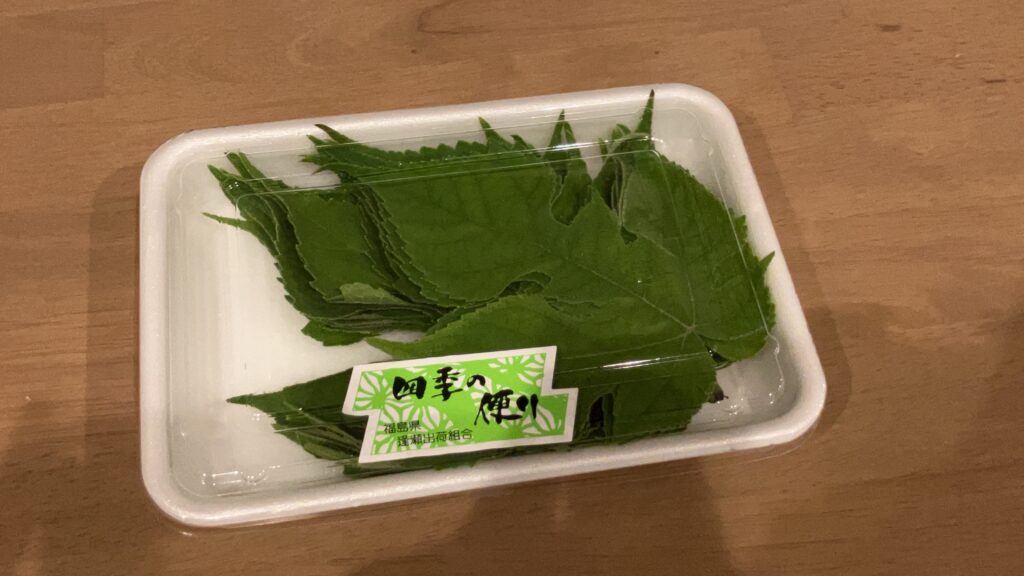
Carrying an increasing number of ingredients—along with ice packs to keep them cold—became surprisingly strenuous as we continued walking. By the end of the tour, I realized that visiting the market requires not only enthusiasm but also a bit of planning for efficient shopping and carrying.
I am truly grateful to have joined this tour.
Japanese cuisine is built on the ability to draw out the natural character of each ingredient with care. That is why learning to “see” ingredients properly feels essential as I continue studying Kaiseki.
I hope to return to Toyosu Market and gradually refine my senses over time.