Tea Picking in Sayama — A Day of Learning Through Taste and Handwork

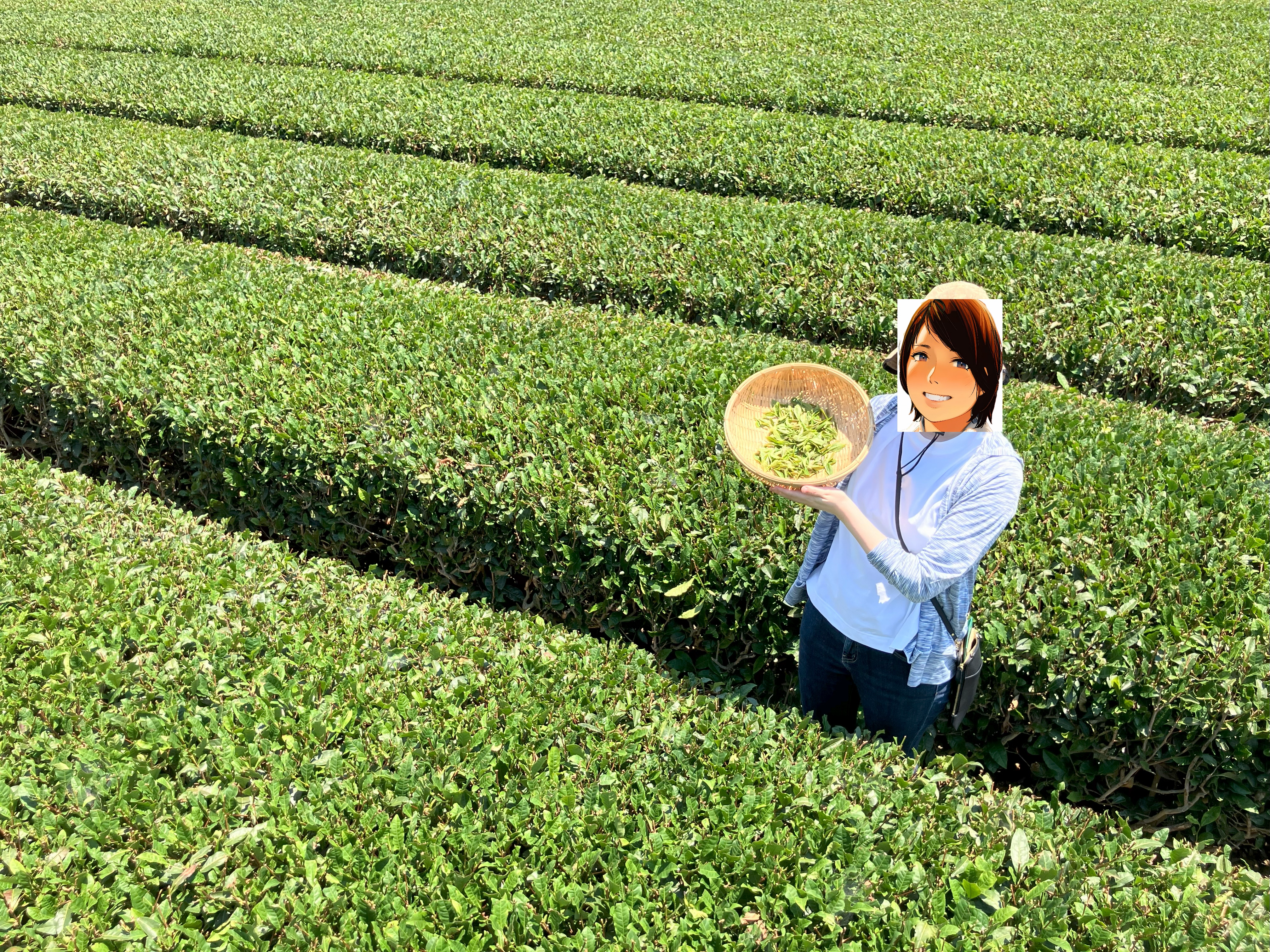
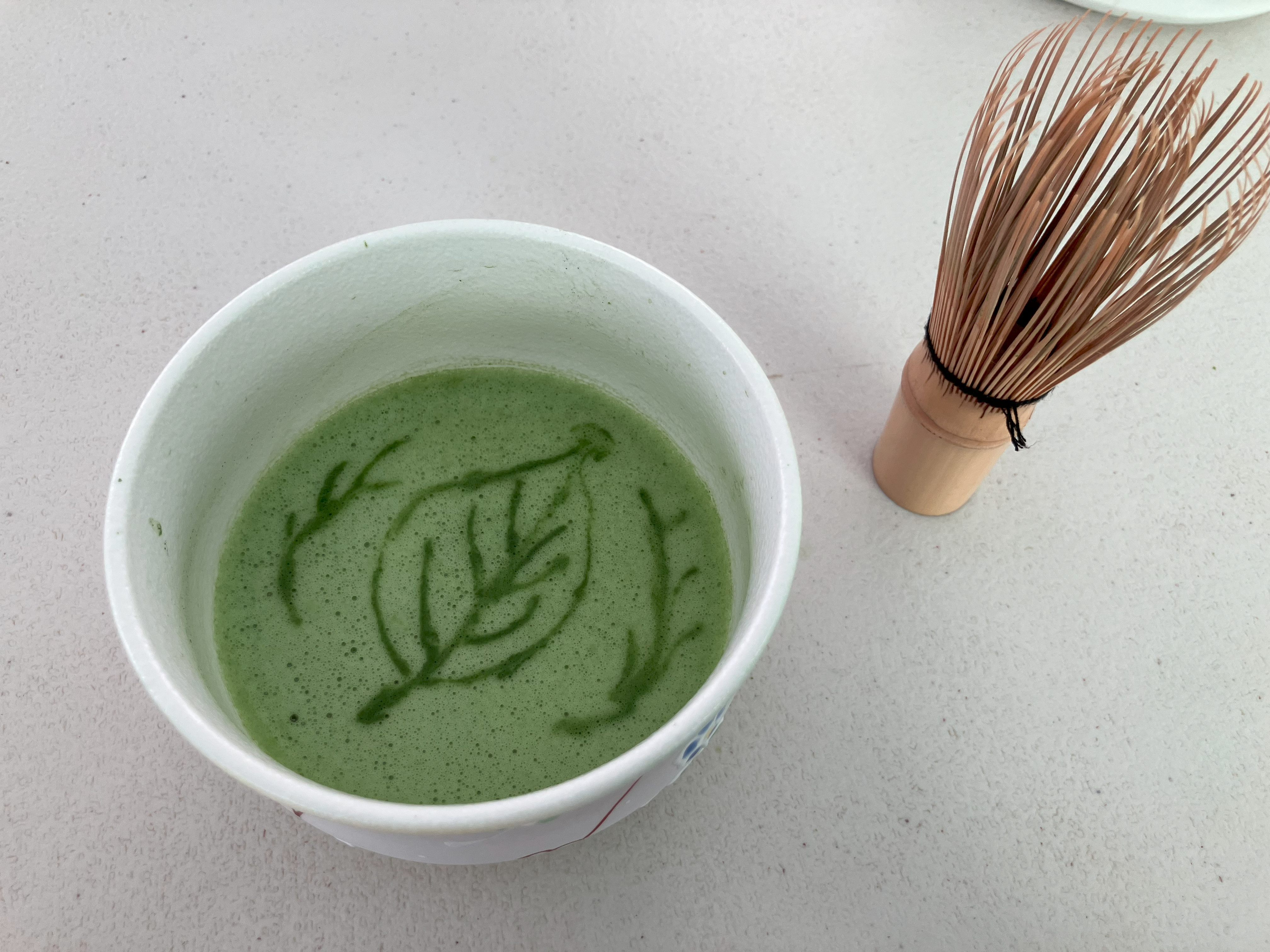
On a sunny Sunday in June, I visited Sayama for the first time to experience tea picking with friends. Sayama is known as one of Japan’s three major tea regions, and it is surprisingly accessible from central Tokyo. On this particular day, we were given a special program that allowed us to enjoy both tea picking and a matcha-making experience.
Standing among the wide tea fields, surrounded by fresh green leaves, I felt the same sense of calmness that comes from shinrin-yoku, or forest bathing.

1. Careful Handwork — Picking Ishin-niyō (one bud, two leaves)

Tea leaves used to make Tencha (tea leaves for matcha) are picked by finding Ishin-niyō (one bud and two leaves) on the young tea shoots.
Since the leaves had been grown under shade and had not yet been exposed to strong sunlight, each bud was soft and tender.
As I gently picked the young shoots one by one, I realized how much time tea farmers spend caring for each leaf. The slow, repetitive movement felt grounding, and gave me a deeper appreciation for the handwork behind matcha.

2. Sayama’s Terroir — Tasting Fresh Tea Leaves

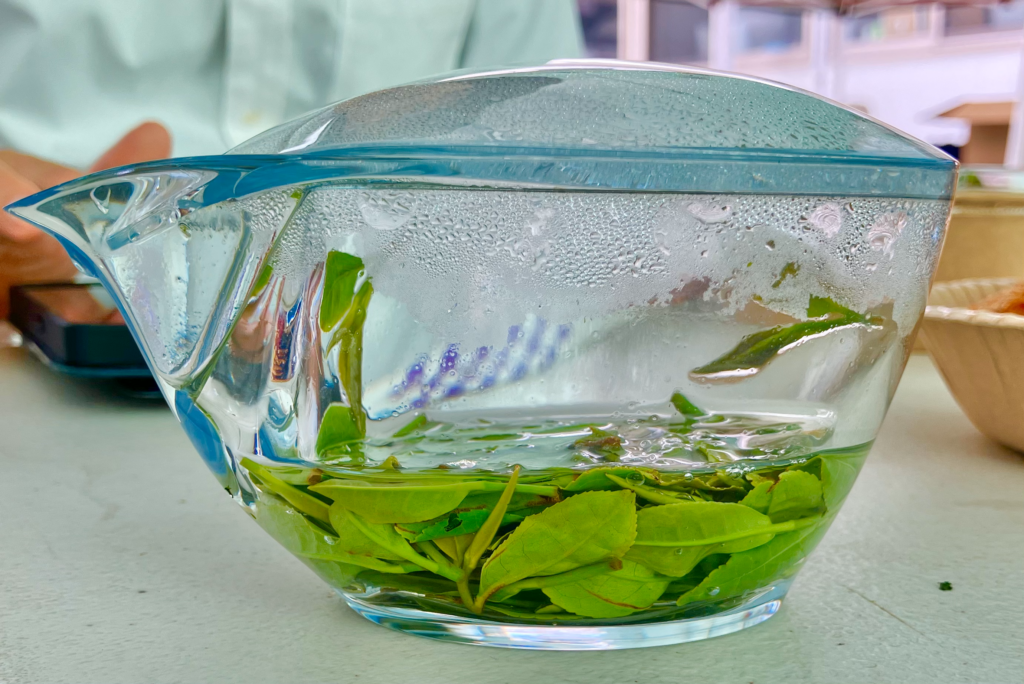
Next, we enjoyed a simple herbal tea made from the freshly picked leaves. Like wine, the flavor of tea also changes depending on the land and climate, so tasting it on the spot felt especially precious.
We were also served Tencha Tempura (tempura made from tea leaves)—a rare experience where you can enjoy tea leaves as food. The crisp texture and gentle aroma made it a quiet moment of luxury.

3. The Rhythm of Grinding — Making Matcha by Hand

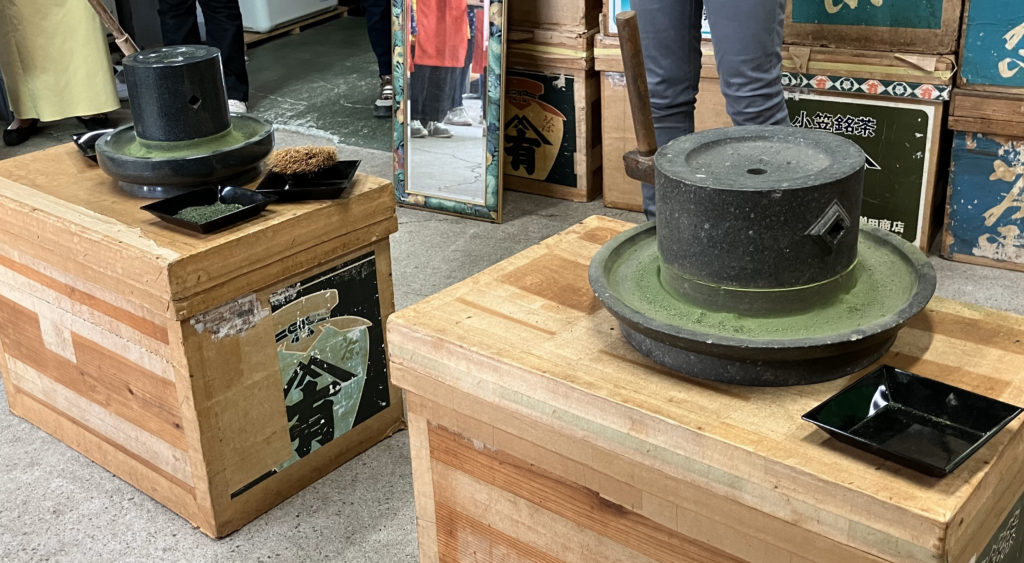
In the afternoon, we ground dried tea leaves using an Ishiusu (stone mill).
The speed of turning the mill affects how heat transfers to the tea, so maintaining a steady rhythm is essential.
As I focused on the circular motion, I found myself slipping into a gentle, meditative state.
Someday, for a Kuchikiri (opening of the tea jar) gathering, I hope to have an ishiusu at home. For now, I simply want to continue studying tea with care and intention.

After spending a full day moving from the tea field to processing and tasting, I was reminded of something important:
tea ceremony cannot exist without tea itself.
Learning about tea at its source—the land, the leaves, the craftsmanship—gave me a deeper sense of connection to what I practice in the tearoom.

Where I visited: Miyanoen (Sayama)
Note: This was a special plan that allowed us to experience both tea picking and matcha making in one day. Usually, participants choose one or the other.

*Tea picking, also known as tea plucking, involves selecting and harvesting the young, tender leaves and buds of the tea plant, typically focusing on the topmost shoots. The process usually aims to collect the ideal combination of one bud and two leaves, which is considered the best for making high-quality tea.

*The three most famous teas in Japan are Shizuoka tea, Uji tea (Kyoto), and Sayama tea (Saitama) .