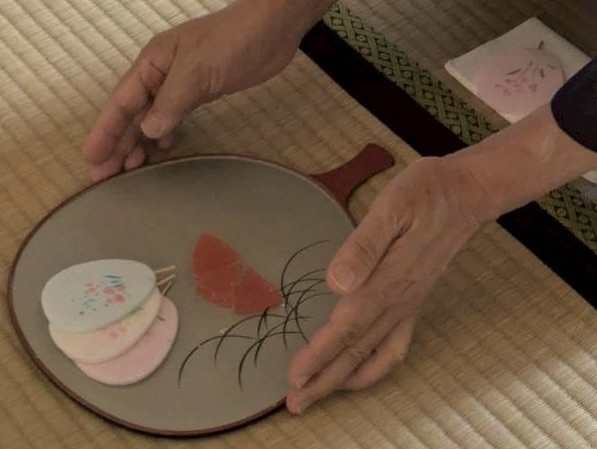
Higashi are traditional dry Japanese sweets typically served before usucha at tea gatherings.
Made with ingredients such as sugar, rice flour, and wasanbon, they have a longer shelf life than fresh sweets and are often molded, pressed, or baked into delicate seasonal shapes.
It is common for two different kinds of higashi to be served together at tea gatherings, providing a balance of flavors, textures, colors, and seasonal expression.
| Type | Japanese | Description |
|---|---|---|
| Rakugan | 落雁 | A delicate confection made by pressing sugar and rice flour into wooden molds, often shaped like seasonal flowers, leaves, or other motifs. |
| Unpei | 雲平 | A translucent sugar confection, often crafted into delicate seasonal motifs. |
| Konpeitō | 金平糖 | Small, star-shaped sugar candies with a crisp texture and a long history in Japan. |
| Fuyaki Senbei | 麩焼煎餅 | Thin, crisp wafers made from glutinous rice, often decorated with seasonal designs or lightly filled with sweet ingredients. |
| Sogidane | そぎ種 | A light, crisp confection made from thin roasted rice wafers coated with sugar or wasanbon. |
| Suhama | 州浜 | A soft, dry sweet made from roasted soybean flour and sugar, often shaped into small seasonal forms. |
| Kohakutō | 琥珀糖 | A sugar-and-agar confection with a crisp outer layer and a soft, jelly-like center that resembles a crystal gemstone. |
Compared with omogashi, higashi are lighter and drier in texture, making them especially well suited to accompany the refreshing taste of usucha.