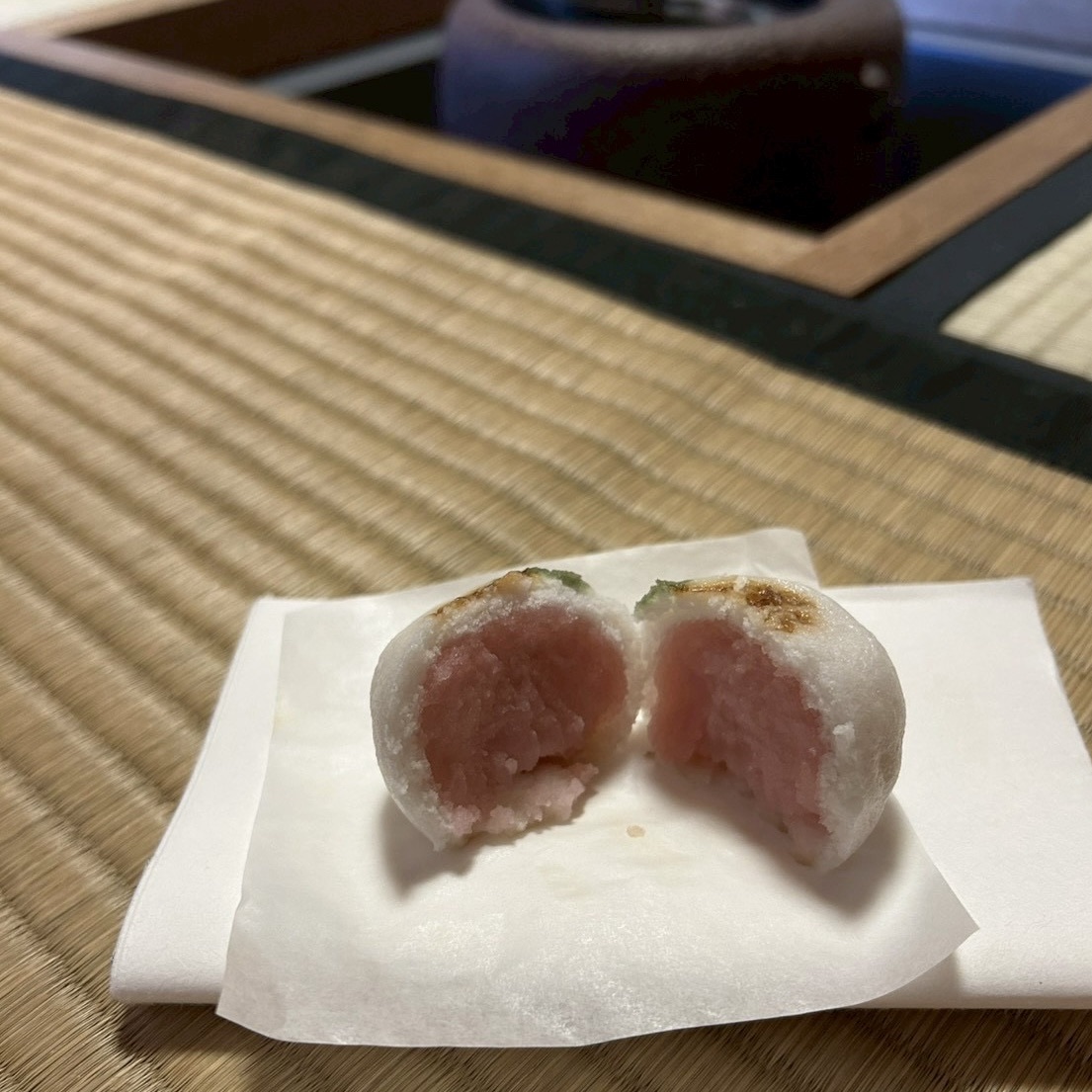
Omogashi is a traditional fresh Japanese sweet served before koicha during a formal chaji and before usucha at many chakai.
It is also commonly served at teicha, where visitors can enjoy matcha and seasonal sweets at temples, gardens, museums, cultural events, and other public venues.
Made from a variety of ingredients, including sweet bean paste, rice flour, sugar, and yam, these confections are carefully crafted to reflect the season through their shape, color, texture, and name.
| Type | Japanese | Description |
|---|---|---|
| Nerikiri | 練り切り | A soft confection made from white bean paste and gyūhi (soft rice dough), hand-shaped into seasonal flowers, leaves, fruits, and other natural motifs. |
| Jōyō Manjū | 薯蕷饅頭 | A steamed confection made with grated Japanese yam and rice flour, filled with sweet bean paste. It is prized for its delicate texture and refined appearance. |
| Kinton | きんとん | Fine strands of sweet bean paste wrapped around a bean-paste filling, often representing flowers, autumn foliage, snow, or other seasonal scenes. |
| Mochigashi | 餅菓子 | Soft rice-cake confections made with mochi or gyūhi, often filled with sweet bean paste or seasonal ingredients. |
Each omogashi is given a poetic name, known as a mei (銘), which often evokes the season, nature, classical literature, or a cultural tradition.
After enjoying the sweet, guests traditionally ask its mei, then take a moment to reflect on how its name, design, and ingredients express the season. In this way, both the sweet and its mei become an important part of the host’s hospitality and the shared aesthetic experience of the tea gathering.