Before the rainy season had begun, I had the opportunity to help at a Teicha hosted by the local tea association to which my teacher belongs.
From early in the morning, four of us took turns serving as host or assistant host, welcoming each guest with a bowl of tea.
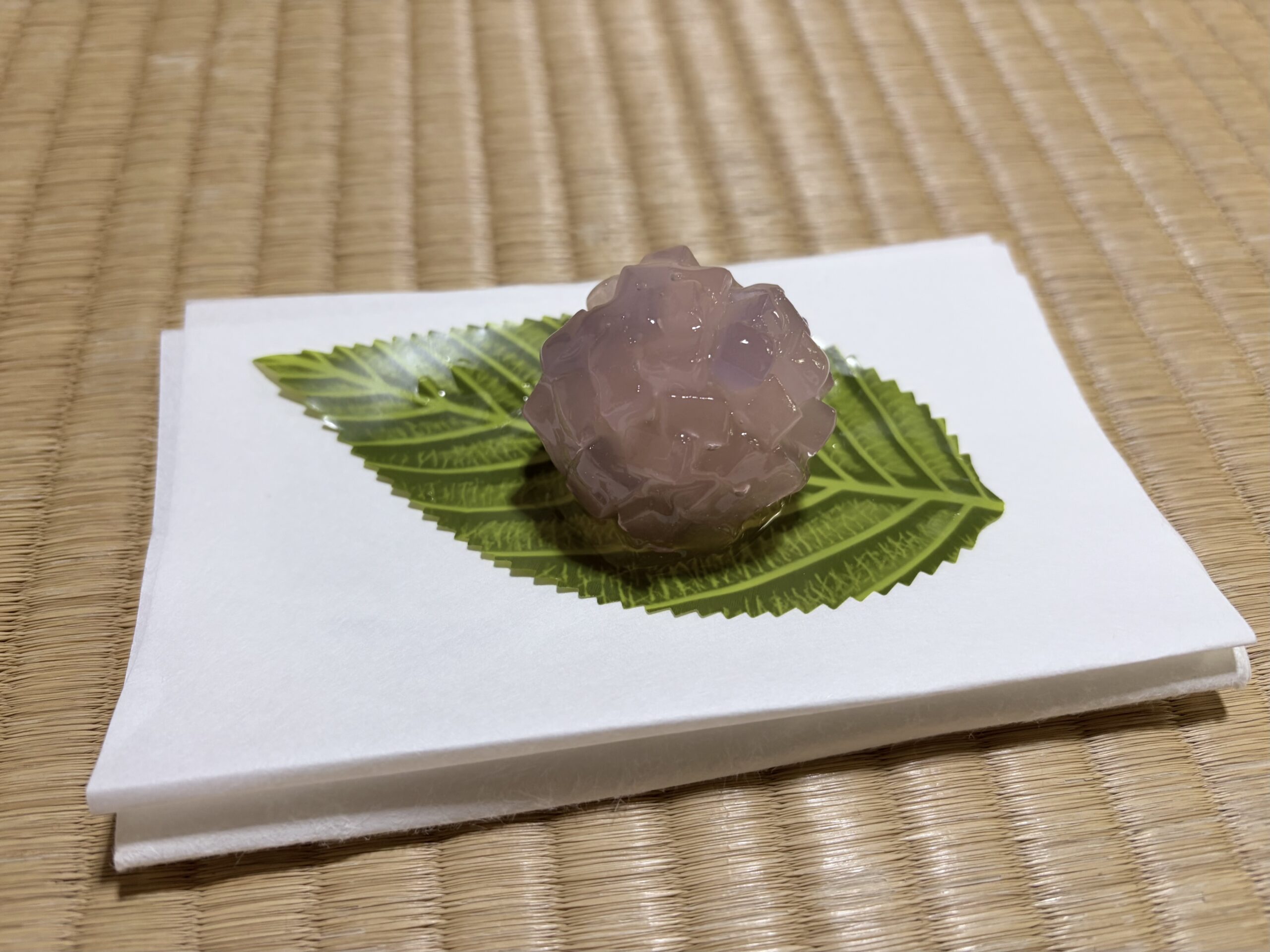
The seasonal sweet prepared by a local confectionery was an elegant hydrangea-shaped wagashi.
As the temperature climbed to nearly 30°C (86°F), its translucent kingyoku jelly shimmered beautifully, offering a refreshing sense of coolness that I hope our guests enjoyed.
I still become nervous whenever I prepare tea in front of guests.
Even after years of practice, that feeling has never completely disappeared.
Yet, with each passing year, I find quiet encouragement in noticing small signs of growth — the refinement of each movement, a steadier posture while whisking the tea, and more natural eye contact with my guests.
Practice days are often surprisingly hectic.
Before each lesson, I rush to review procedures, remember everything I want to ask my teacher, and finish my work beforehand.
More often than not, my thoughts continue racing even as the lesson begins.
Experiences like serving real guests, however, have a way of bringing my mind back into focus.
As soon as I step into the tea room, everything outside seems to fade away, leaving only the person before me and the bowl of tea in my hands.
Perhaps that is the true meaning of Kissako — to set aside distractions and simply be present for this single moment.
I hope that, with each gathering, I can continue learning to do just that.