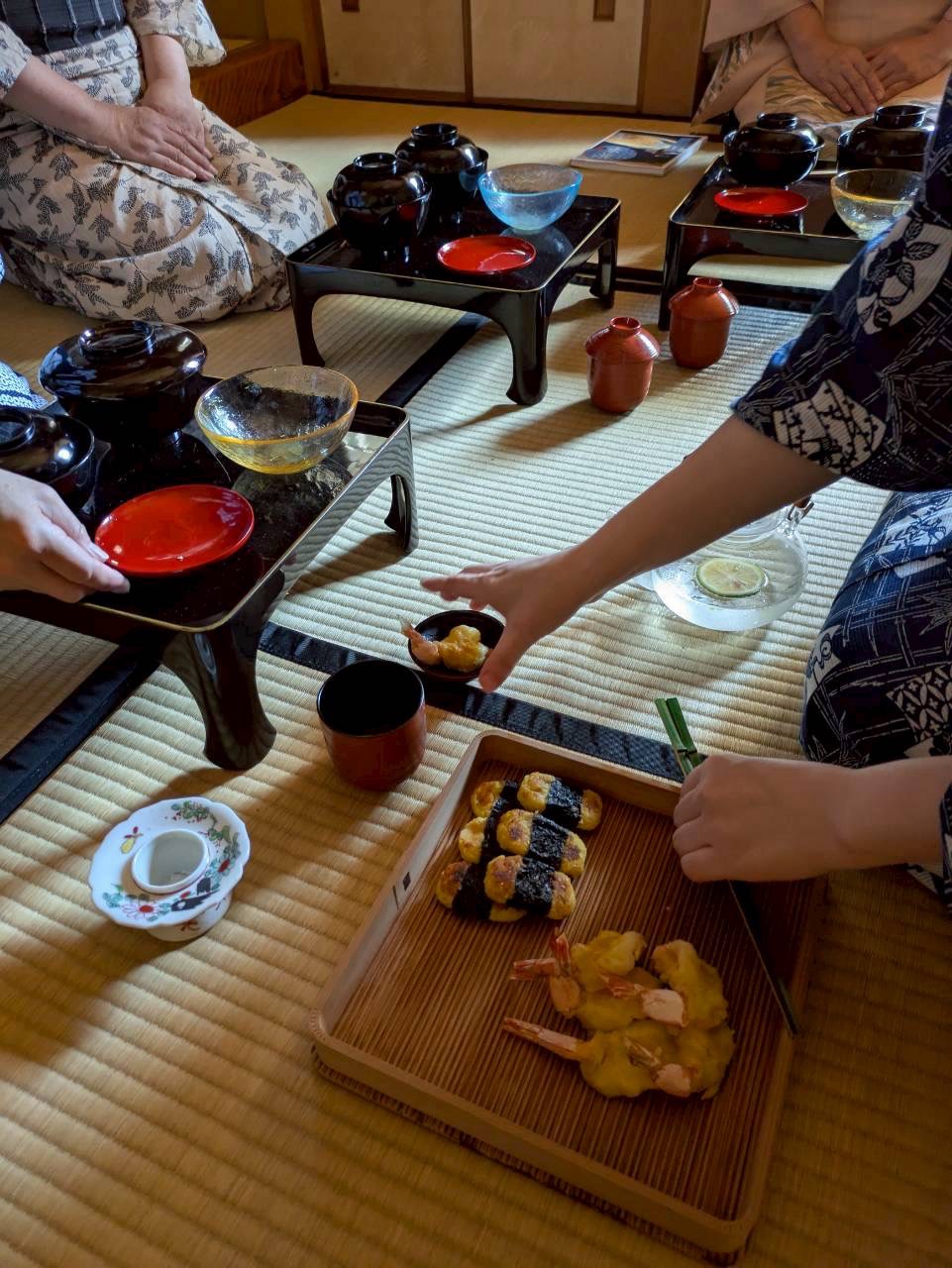
The word kaiseki originally comes from the Zen practice of placing a warm stone (kai, “bosom”; seki, “stone”) inside the front of one’s robe to ease hunger during periods of fasting.
In the tea ceremony, this idea came to represent a simple, seasonal meal served before tea.
Today, kaiseki can also refer to an elaborate multi-course Japanese cuisine, while cha-kaiseki specifically means the meal served as part of a chaji, where it prepares guests for the tea that follows through modest portions, seasonal ingredients, and thoughtful hospitality.
Structure of a Cha-kaiseki Meal
Kōsen 香煎 (Salted Kelp Tea)
↓
Oshiki 折敷 (Tray with the items below)
*Ii · Shiru · Mukōzuke 飯・汁・向付 (Rice, Miso Soup & Sashimi)
↓
Nimono-wan 煮物椀 (Simmered Soup)
↓
Yakimono 焼物 (Grilled Dish)
↓
Azukebachi 預鉢 (Shared Dish)
↓
Hashiarai 箸洗い (Clear Broth)
↓
Hassun 八寸 (Seasonal Delicacies)
↓
Yutō & Kō no Mono 湯斗・香物 (Hot Water over Rice & Pickles)
After the meal, the gathering continues with omogashi (fresh sweets), koicha (thick tea), higashi (dry sweets), and usucha (thin tea).