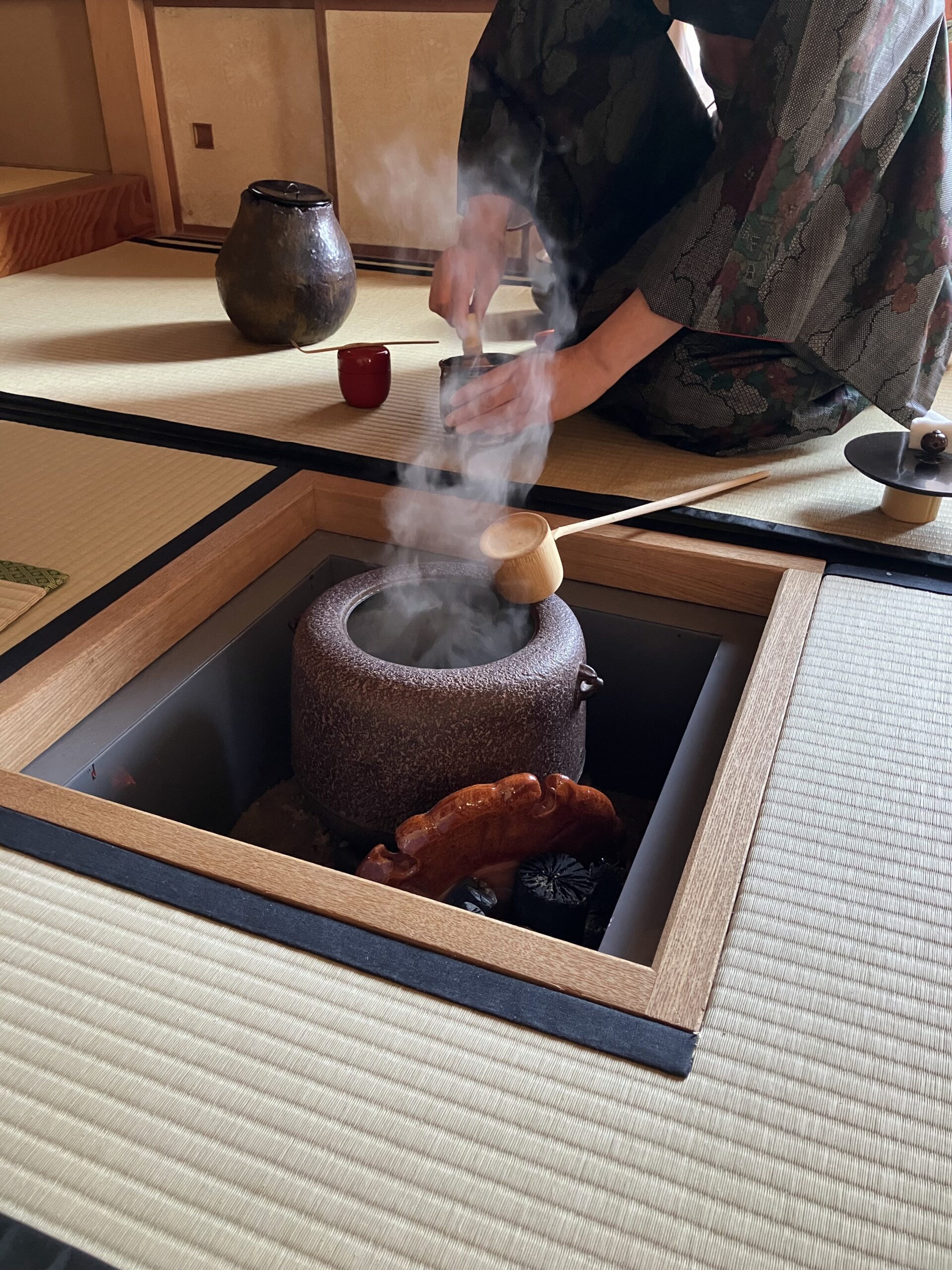
Chadō, also known as Sadō, or Chanoyu, and often referred to in English as the Japanese tea ceremony, is the traditional Japanese practice of preparing and serving matcha.
It develops from the powdered tea culture introduced from China in the late 12th century and is shaped by Zen Buddhism, becoming a cultural art that values harmony, respect, purity, and tranquility.
Today, more than 40 Chadō organizations and traditions are active in Japan, including Urasenke, Omotesenke, and Mushanokōjisenke.
While each has its own style and customs, they share the same fundamental spirit.
Chadō is practiced through formal chaji, more casual chakai, and regular lessons.
Beyond learning how to prepare tea, practitioners study etiquette, seasonal appreciation, calligraphy, ceramics, flower arrangement, architecture, textiles, incense, and Japanese cuisine. For this reason, the 16th Grand Master of Urasenke has described Chadō as “a portal to Japanese culture,” reflecting how many traditional arts come together through tea.
Although many people begin Chadō as a hobby, it is generally regarded as a lifelong discipline rather than a casual pastime.
Even in Japan, its formal etiquette and long-established traditions can make it seem intimidating to newcomers.
Finding ways to preserve this cultural heritage while making it more accessible to people in Japan and around the world remains an important challenge.