Once you begin practicing Chado, the Japanese way of tea, your interest in Kyoto naturally grows.
The headquarters of the Urasenke tradition are there. The families known as the Senke Jisshoku have crafted tea utensils for generations in support of the tea tradition. Uji, famous for producing matcha, and many long-established wagashi, traditional Japanese sweets, shops are found throughout the city.
Before long, it feels as though every path in Chado eventually leads to Kyoto.
Like many people in Japan, I first visited Kyoto on a school trip. Because I transferred schools when I was younger, I ended up visiting the city more than once. At the time, I remember thinking, “I’ve had enough of Kyoto.” – I got it all wrong.
Kyoto was also a place closely connected to my family’s history. Yet, for various reasons, I never had the chance to sit down with my relatives and ask about those connections while they were still alive.
It was only later that I learned our family grave is located at a historic temple. To my surprise, it is a well-known sub-temple whose name often appears on the hanging scrolls displayed at tea gatherings. Discovering this only after it was too late left me with a quiet sense of regret.
Fortunately, one opportunity still remained.
While planning a trip to Kyoto with friends from my Chado class, I arranged to visit the temple with my family, who had been there before.
I didn’t feel comfortable arriving empty-handed, so I brought a box of rice crackers from a well-known shop in Tokyo and bought fresh flowers on the morning of our visit.
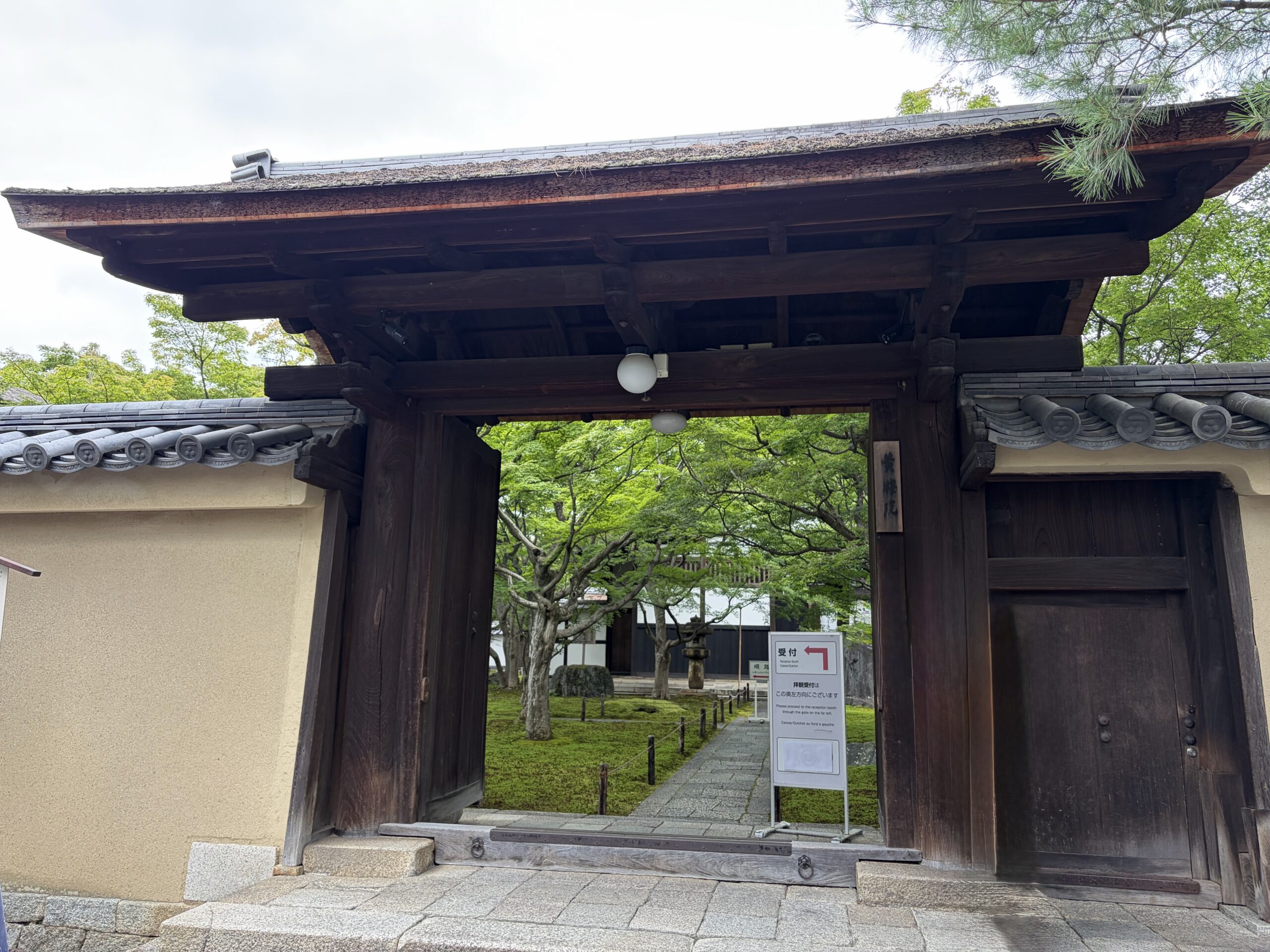
The temple grounds are quite large, with several sub-temples, but the one we were looking for was just inside a gate near the bus stop. We found it without getting lost.
On the way to the cemetery, visitors first pass through a small building where they sign the visitor’s book and fill a bucket with water for the graves. From there, we walked into the cemetery.
The family grave stood near the entrance. It was easily the most impressive grave I had ever seen.
As we walked toward it, my family shared stories about our ancestor that I had never heard before. Listening to her, I found myself thinking about my own roots in a way I never had before.
By the time we stood in front of the grave, the visit had become much more than simply paying our respects.
The temple buildings themselves are normally closed to the public, except during special viewing periods in spring and autumn. We had visited outside those seasons, but we were fortunate enough to be allowed inside.
We admired the beautiful garden and the quiet rooms. I also noticed several pieces of calligraphy, probably written by the head priest, accompanied by short handwritten explanations.
Unfortunately, the head priest appeared to be quite busy that day, so all I could do was offer a respectful bow from a distance.
Near the entrance, however, one framed message quietly caught my attention.
It was written as though an aging parent were speaking to their children.
“Just as I stayed by your side at the beginning of your life,
I hope you will stay by mine for a little while at the end of it.”
I don’t remember every kindness my parents gave me while I was growing up. As someone living in the era where families are becoming smaller and the population is aging, I also couldn’t help feeling that those words carried a certain weight from the child’s point of view. They were comforting, but they also reminded me of a responsibility that many of us may face one day.
At the same time, I realized that the day will eventually come when I may be the one asking someone to stay by my side.
That thought made me pause.
It reminded me that life cannot be lived only for myself. Instead of thinking only about what I want or need, I hope to become someone whose words and actions bring a little happiness to the people around me, wherever I happen to be.
Perhaps that is one way of living the spirit behind the Japanese expression Chion Hōon—knowing the kindness we have received and finding our own way to return it.