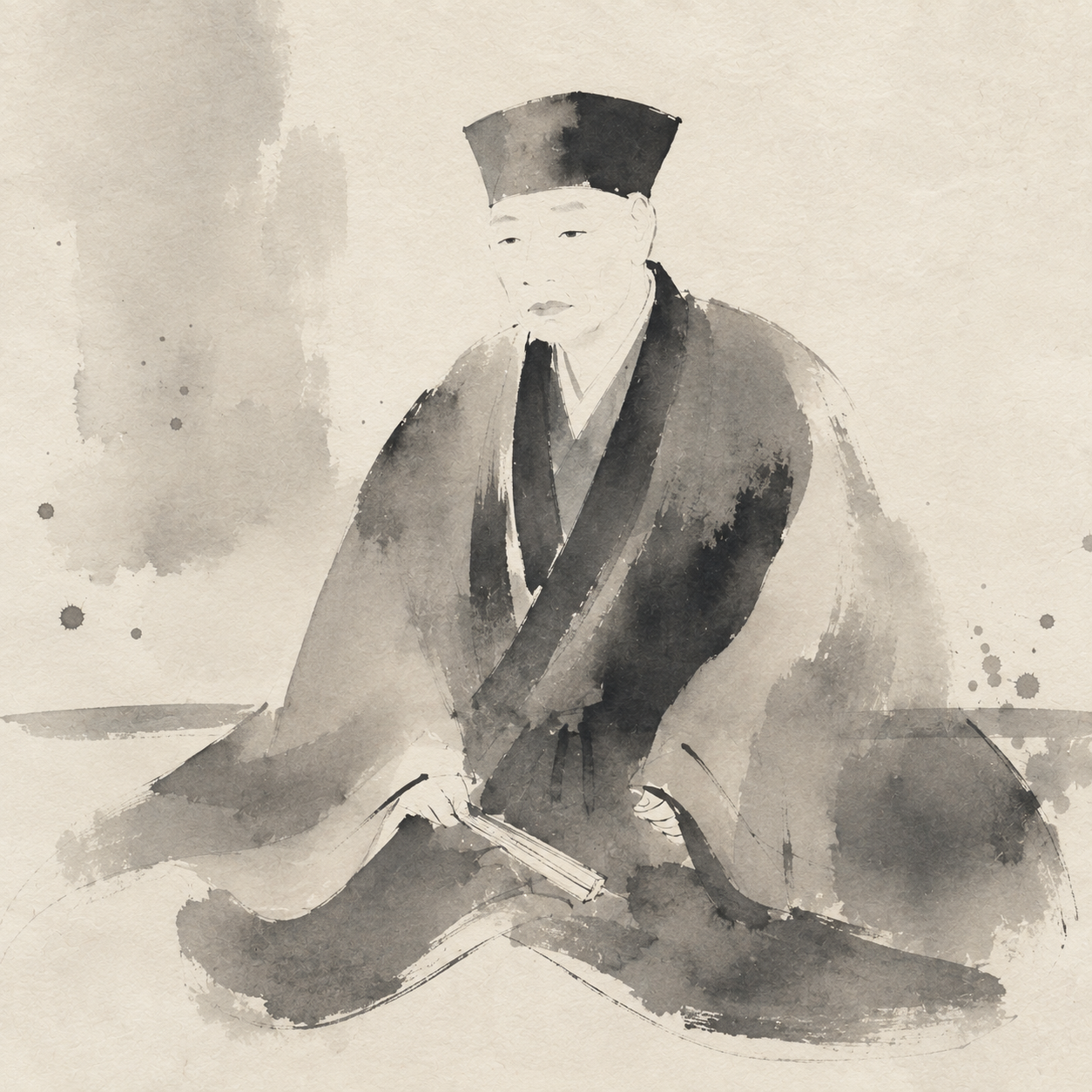
Sen no Rikyū (1522–1591) is one of the most influential tea masters in the history of Chado, the Japanese Way of Tea. Building upon the ideals of wabi-cha established by Murata Jukō and further developed by Takeno Jōō, Rikyū refined the practice into a form that emphasized simplicity, sincerity, close attention to each guest, and the beauty found in modest spaces and utensils. His teachings became the foundation of what is now recognized as Chado.
Rikyū served as tea master to Oda Nobunaga and Toyotomi Hideyoshi, and his ideas profoundly influenced generations of tea practitioners, daimyō, artisans, and later tea traditions. His legacy was carried forward through his adopted son and son-in-law Sen Shōan, and then through Shōan’s son Sen Sōtan, Rikyū’s grandson.
Three of Sōtan’s sons established the family lineages now collectively known as the San-Senke, or the Three Sen Families, which continue to preserve and develop Rikyū’s tea today.
| Tea tradition | Founder | Tea room | Origin of the name |
|---|---|---|---|
| Omotesenke (表千家) | Kōshin Sōsa (Sōtan’s 2nd son) | Fushin’an | The Sen residence located on the front (omote) side of the property |
| Urasenke (裏千家) | Sensō Sōshitsu (Sōtan’s 3rd son) | Konnichian | The Sen residence located on the rear (ura) side of the property |
| Mushanokōjisenke (武者小路千家) | Ichiō Sōshu (Sōtan’s 2nd son) | Kankyūan | The Sen residence facing Mushakōji Street |
Although each of the Three Sen Families has developed its own procedures, customs, and aesthetic preferences, they all share the same foundation established by Rikyū. His influence also extends to many other tea traditions founded by tea masters and daimyō inspired by his teachings.
Major Tea Traditions Influenced by Rikyū
| Tea tradition | Founder | Relationship to Rikyū |
|---|---|---|
| San-Senke (三千家) | Sen family | Direct descendants of Rikyū through Sen Shōan and Sen Sōtan. |
| Oribe Tradition (織部流) | Furuta Oribe | One of Rikyū’s leading disciples, known for bold aesthetics. |
| Enshū Tradition (遠州流) | Kobori Enshū | Developed the elegant kirei-sabi style while drawing on Rikyū’s tea. |
| Sekishū Tradition (石州流) | Katagiri Sekishū | Combined the spirit of Rikyū’s tea with samurai culture. |
Rikyū’s influence can also be seen in tea utensils and tea practice. Utensils associated with his designs or preferences are known as Rikyū-gonomi (“preferred by Rikyū”). Successive heads of the Sen Families also commissioned and favored their own tea utensils, many of which are known by the name of the grand master who preferred them—for example, Gengensai-gonomi. They also refined existing forms of temae and introduced new procedures that continue to be practiced today. As a result, Chado continues to evolve while remaining rooted in Rikyū’s philosophy.