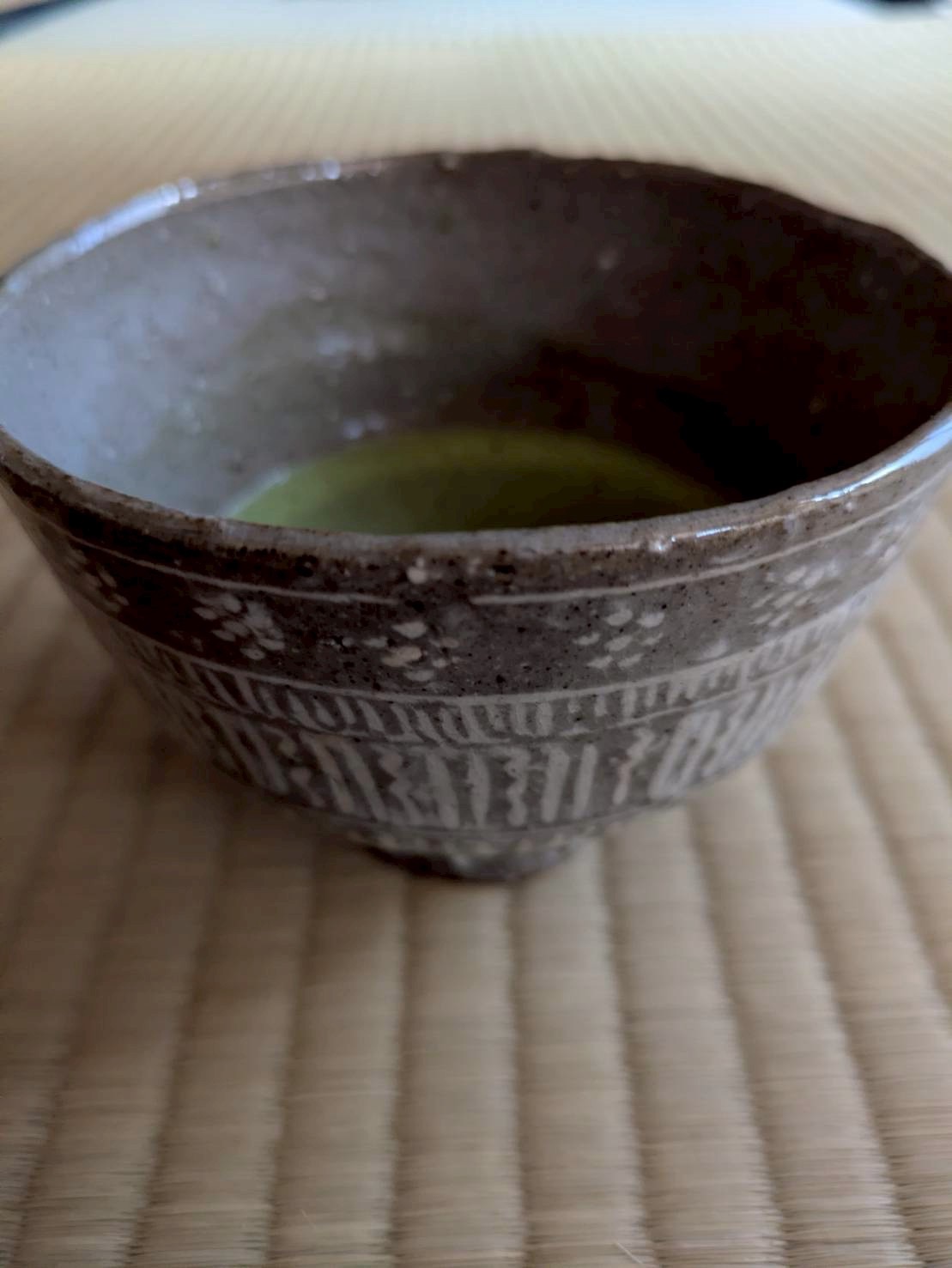
Chawan is the bowl used to prepare and drink matcha in the Japanese tea ceremony.
More than a simple vessel, it is carefully chosen to suit the season, the style of the gathering, and the other utensils selected by the host.
Tea bowls vary widely in shape, size, clay, glaze, and place of origin, with well-known traditions including Raku, Hagi, Karatsu, Shino, and Seto ware.
Bowls for winter are often deeper to help retain heat, while summer bowls tend to be wider and shallower, creating a sense of visual coolness.
After drinking the tea, guests often take a moment to appreciate the bowl and may ask about its maker, kiln, or history.
In this way, the chawan serves not only as a practical utensil but also as an important expression of Japanese craftsmanship, aesthetics, and the spirit of hospitality.
Note: In everyday Japanese, chawan also refers to an ordinary rice bowl or bowl used for daily meals. The same word is used in the tea ceremony, but there it specifically refers to a bowl made or selected for preparing and enjoying matcha.